Brief history of cheese making in South Africa
The history of cheese making in South Africa can be traced back to the early days of European colonization in the 17th century. The Dutch and French settlers brought with them their traditional cheese making techniques and knowledge, which laid the foundation for the South African cheese industry.
In the early days, cheese was primarily produced on small-scale farms by individual farmers. The cheese produced was primarily for personal consumption and was not widely available for purchase. However, as the population of South Africa grew, so too did the demand for cheese.
During the 19th century, the cheese industry in South Africa began to expand, with the establishment of large-scale commercial dairy farms. These farms produced a variety of cheese types, including cheddar, gouda, and edam. These types of cheese quickly became popular among South Africans, and they remain popular to this day.
As the 20th century progressed, the South African cheese industry continued to grow and evolve. New technologies were introduced, such as pasteurization and refrigeration, which allowed for the production of a wider variety of cheese types. Additionally, the increasing demand for cheese from both domestic and international markets led to the establishment of large-scale cheese factories.
Today, South Africa is a major cheese producer, with a wide variety of cheese types available on the market. Some of the most popular cheese types in South Africa include cheddar, gouda, feta, brie, camembert and blue cheese.
Cheddar is a hard cheese with a slightly tangy, nutty flavor. It is used in a wide variety of dishes, from sandwiches to casseroles, and is a staple in many South African households.
Gouda is a semi-hard cheese with a nutty, buttery flavor. It is often used in sandwiches and as a topping for crackers and bread.
Feta is a soft, crumbly cheese with a tangy, salty flavor. It is often used in salads, sandwiches, and as a topping for pizza.
Brie is a soft cheese with a creamy, buttery flavor. It is often served as a dessert cheese or used in sandwiches and crackers.
Camembert is a soft cheese with a creamy, slightly mushroomy flavor. It is often served as a dessert cheese or used in sandwiches and crackers.
Blue Cheese is a type of cheese with a distinctive blue veining and a tangy, sharp flavor. It is often used in salads, sandwiches, and as a topping for crackers.
Buy cheese making kits, culture and rennet in South Africa from: cheesemaking.co.za/shop
Check out our Facebook page: https://www.facebook.com/capecheesemaking
Cheesemaking as careerpath
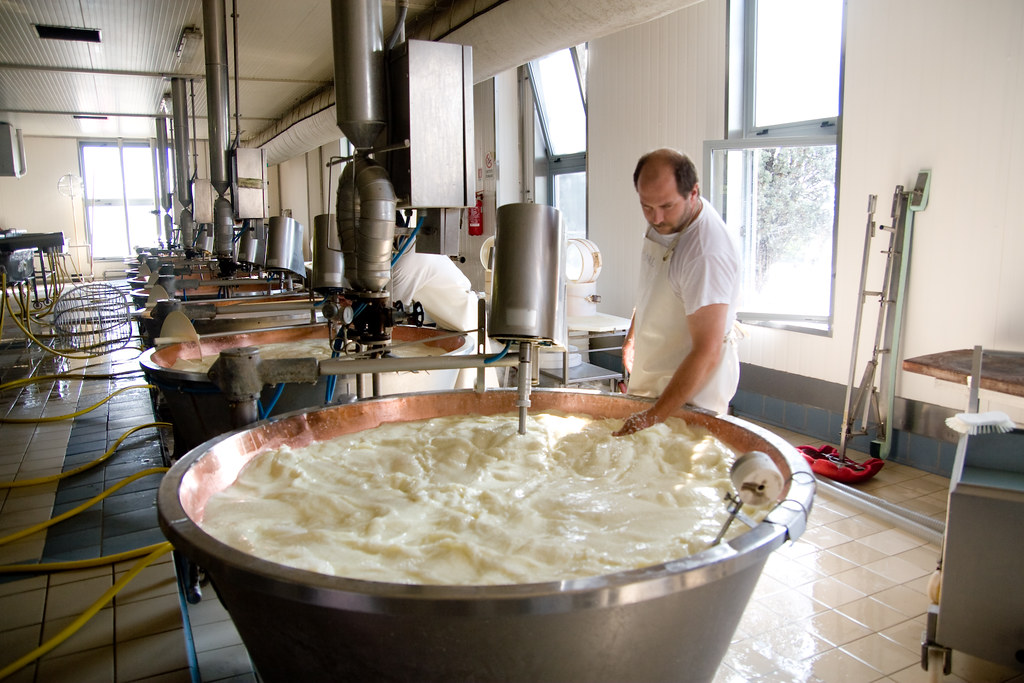
Want to be a cheese maker? Here is some info in a question and answer format:
What type of person will enjoy this career and
what are good characteristics to have to succeed in this career?
Cheese making can be a very rewarding and satisfying career for those who have a passion for food and enjoy working with their hands. It is a career that requires attention to detail, patience, and a willingness to learn and adapt.
To be successful as a cheese maker, you should have good organizational skills, as the process of cheese making requires precise measurements and timing. You should also have a keen sense of smell and taste, as these senses are essential for creating and evaluating the flavors and textures of different types of cheese. Additionally, you should be able to work well independently and as part of a team, as cheese making often involves both solo work and collaboration with others.
Physical stamina is also important as the work can be demanding, as it will involve manual labor, long hours and physical activity. Good problem-solving skills are also important as, cheese making process can be complex and unexpected issues may arise, you will need to find a solution to fix it.
It’s also beneficial to have knowledge of food science, microbiology, and chemistry, as a understanding of these subjects will help you understand the complex process of cheese making.
In summary, a person who is passionate about food, has an attention to detail, good organizational skills, a keen sense of smell and taste, ability to work well independently and as part of a team, Physical stamina, problem-solving and knowledge of food science, microbiology, and chemistry will enjoy and succeed in cheese making as a career.
What does the job entail?
A cheese maker’s job typically entails a wide range of tasks that are involved in the process of producing cheese. Some of the main responsibilities include:
Developing and testing new recipes: Cheese makers may work on developing new recipes for different types of cheese, experimenting with different ingredients, and testing the results to ensure that the flavor, texture, and appearance of the cheese meet the desired standards.
Producing cheese: Once a recipe has been developed, cheese makers will use it to produce cheese in large quantities. This will involve a series of steps such as preparing the milk, adding cultures and enzymes, heating, cooling, and salting the milk, cutting and stirring the curds, shaping and pressing the cheese, and monitoring the temperature and humidity during the aging process.
Monitoring and testing: Cheese makers will constantly monitor the cheese throughout the production process, testing it for acidity, moisture, and pH levels to ensure that it is developing properly and meets the desired standards.
Sanitation and safety: Cheese makers must maintain a high level of sanitation throughout the production process to prevent contamination of the cheese and to ensure that it is safe to eat.
Record Keeping: Cheese makers will keep detailed records of the production process, including the recipes used, the ingredients, the quantities produced, and the results of any testing that was done.
Quality control: Cheese makers will be responsible for ensuring that the cheese they produce meets the quality standards set by the company or by regulatory authorities.
Maintenance: Cheese makers may also be responsible for maintaining the equipment and facilities used in the production process, such as cleaning, troubleshooting, and performing routine repairs.
Marketing: Cheese makers may also be involved in promoting and selling their cheeses to customers, creating packaging and labeling for their products, and attending events or trade shows to showcase their cheeses.
What is an average day at work like?
An average day for a cheese maker can vary depending on where they work and the type of cheese they are making, but there are some common tasks that they will typically perform.
In the morning, a cheese maker will begin by preparing the milk and getting the equipment ready for the cheese making process. This may involve pasteurizing the milk, adding cultures and enzymes, and heating the milk to the correct temperature.
Once the milk is ready, the cheese maker will then begin the process of separating the curds from the whey. This is done by adding rennet to the milk and allowing it to coagulate, and then cutting the curd using a curd knife.
After the curds are cut, the cheese maker will then heat the curds and whey to the desired temperature, which will vary depending on the type of cheese being made. The cheese maker will also need to monitor the acidity and pH of the curds to ensure that they are developing correctly.
After the curds are heated, the cheese maker will then begin the process of shaping the cheese, This can be done by ladling the curds into molds, pressing them, or by salting and aging the curds to create cheese such as cheddar.
Throughout the day, the cheese maker will also be monitoring the cheese as it ages, and may need to turn or flip it to ensure that it is aging evenly. They will also test the cheese for moisture content, acidity, and other factors to ensure that it is developing correctly.
Cheese makers will also spend time cleaning and sanitizing equipment, as well as, recording the details of the production process to keep track of everything they did and if the cheese is developing as per the recipe, it’s quality and quantity.
Depending on the cheese maker’s role and the size of the operation, some cheese makers may also be responsible for packaging and labeling the cheese, which may involve wrapping the cheese by hand or operating packaging equipment.
Finally, some cheese makers may also spend some of their time promoting and selling their cheeses to customers, whether by attending events, trade shows or by building relationships with retailers.
Best part of the job?
The best part of being a cheese maker can vary depending on the individual, but some common things that people enjoy about this career include:
Working with food: Many people find that working with food and creating something delicious is very satisfying. Cheese making in particular allows for a lot of creativity and experimentation, which can be very rewarding for those who enjoy cooking and food science.
Hands-on work: Cheese making is a very hands-on job that requires attention to detail and precision. Many people find that working with their hands is very satisfying and enjoy the process of shaping and molding the cheese.
Sense of accomplishment: Cheese making can be a complex process that requires patience and a willingness to learn and adapt. When a cheese maker successfully produces a high-quality cheese, they often feel a sense of accomplishment.
Tradition and Heritage : Cheese making has been around for centuries and it’s a trade that has been passed down through generations. Cheese makers are part of keeping the tradition and heritage of cheese making alive.
Variety : Cheese makers can make a wide variety of cheese, which means they get to experiment and learn different techniques, cultures, and methods of making cheese which keeps their job interesting.
The ability to learn: Cheese making is a craft that requires years of practice, testing, and experimentation to master. Cheese makers are constantly learning about new techniques, new types of cheese and new methods for aging and processing cheese. They can keep learning throughout their career.
Best part of the job?
The best part of being a cheese maker can vary depending on the individual, but some common things that people enjoy about this career include:
Working with food: Many people find that working with food and creating something delicious is very satisfying. Cheese making in particular allows for a lot of creativity and experimentation, which can be very rewarding for those who enjoy cooking and food science.
Hands-on work: Cheese making is a very hands-on job that requires attention to detail and precision. Many people find that working with their hands is very satisfying and enjoy the process of shaping and molding the cheese.
Sense of accomplishment: Cheese making can be a complex process that requires patience and a willingness to learn and adapt. When a cheese maker successfully produces a high-quality cheese, they often feel a sense of accomplishment.
Tradition and Heritage : Cheese making has been around for centuries and it’s a trade that has been passed down through generations. Cheese makers are part of keeping the tradition and heritage of cheese making alive.
Variety : Cheese makers can make a wide variety of cheese, which means they get to experiment and learn different techniques, cultures, and methods of making cheese which keeps their job interesting.
The ability to learn: Cheese making is a craft that requires years of practice, testing, and experimentation to master. Cheese makers are constantly learning about new techniques, new types of cheese and new methods for aging and processing cheese. They can keep learning throughout their career.
Worst part of the job?
Like any job, being a cheese maker also has its downsides. Some of the worst parts of the job can include:
Physical Demands : Cheese making is a physically demanding job, as it requires a lot of manual labor, such as lifting heavy bags of milk, and handling equipment that can be heavy and awkward to move. Cheese makers may also have to work in cold environments, which can be physically challenging.
Long Hours : Cheese making can be a time-consuming process, and cheese makers may need to work long hours, including early mornings, evenings, and weekends to ensure that the cheese is produced on time.
Repetitive work : Some of the tasks in cheese making can be repetitive, such as stirring, salting or pressing cheese. This may be tedious and monotonous work, especially over an extended period of time.
Risk of injury: Cheese making involves working with sharp knives and equipment that can be dangerous if not handled properly, and there’s always a risk of slips and falls, or cuts and burns.
Stressful : Cheese making can be stressful, particularly when dealing with unexpected problems, like a batch of cheese that does not develop correctly, or equipment that breaks down.
Uncertainty of weather : Cheese making is often dependent on the quality and availability of milk, and the weather conditions can affect the quality of the milk, which in turn can affect the cheese. This can be frustrating for cheese makers as there’s little they can do to prevent it.
Regulation compliance: Cheese making is subject to a number of regulations and standards, Cheese makers have to ensure that their cheeses comply with all the regulations and standards set by the regulatory authorities, this can be time-consuming, and require lots of paperwork.
Are you paid enough?
The pay for cheese makers can vary depending on a number of factors, such as the size of the operation they work for, their level of experience, and the location of the job.
According to the Bureau of Labor Statistics (BLS), the median annual salary for food and tobacco processing workers, which includes cheese makers, was $28,970 in May 2019. The top 10 percent of workers in this field earned more than $45,710, while the bottom 10 percent earned less than $21,660.
Pay for entry-level cheese makers typically starts at around minimum wage, but can increase with experience and additional training. As a cheese maker gains more experience and takes on more responsibilities, their pay may also increase. However, it’s also worth noting that like most jobs, the salary for cheese makers will be affected by the size of the business and its location. Cheese makers who work for smaller companies or those located in rural areas may earn less than those who work for large companies or in more urban areas.
In summary, it’s difficult to give an accurate figure for a cheese maker’s pay, but according to the BLS, the median annual salary for food and tobacco processing workers, which includes cheese makers, was $28,970 in May 2019. Pay can vary based on the factors such as location, experience, and size of the operation they work for.
Rate your work stress level on a scale of 1 to 10
Cheese making can be a demanding and challenging job, as it requires a lot of physical labor and attention to detail. Cheese makers may need to work long hours, and must also deal with unexpected problems such as broken equipment, changes in milk quality, and complying with regulations, these factors may contribute to a stressful working environment.
Additionally, the stress level of a cheese maker will also depend on the individual, some people may find the job satisfying and may have a low stress level while others may find it difficult to manage the demands of the job, which can contribute to a high stress level.
Do you have opportunities to travel?
Some cheese makers may travel to attend events or trade shows to showcase their cheeses or learn about new trends and techniques in the industry. They may also travel to visit other cheese making operations or to participate in training or certification programs.
Additionally, Cheese makers who work for international companies or those who export their cheeses may have the opportunity to travel overseas for business. Such as visiting suppliers or clients, or to participate in international events.
Qualifications needed?
The qualifications needed to become a cheese maker can vary depending on the employer and the specific job, but there are a few general qualifications that are commonly required or preferred:
Education: Some employers may require a high school diploma or equivalent, while others may prefer or require post-secondary education in a related field such as food science, microbiology, or dairy technology.
Experience: Many employers prefer to hire cheese makers who have previous experience working in a food production or cheese making environment, however, entry-level positions may also be available for those who are willing to learn on the job.
Technical skills: Cheese makers should have a basic understanding of food science, microbiology, and chemistry, as this knowledge is necessary for understanding the complex process of cheese making.
Physical stamina: Cheese making can be a physically demanding job, and cheese makers should be able to lift and move heavy bags of milk, stand for long periods of time and work in cold environments.
Strong organizational and communication skills: Cheese making requires good organizational skills, as the process of cheese making requires precise measurements and timing. Strong communication skills are also important as cheese makers will often work as part of a team.
Passion for food: Cheese making is a trade that requires dedication, patience and a love of food. Cheese makers should have a passion for creating delicious and high-quality cheeses.
Where to train?
There are a few different options for training to become a cheese maker, including:
On-the-job training: Some cheese makers may start out as entry-level employees and learn the trade through on-the-job training. This can be a great option for those who are willing to work their way up and learn as they go.
Apprenticeship programs: Some cheese making companies or organizations may offer apprenticeship programs, which provide hands-on training in the trade. This option may also provide the opportunity to earn a salary while you learn.
Vocational schools: Many vocational schools or community colleges offer programs in food science, dairy technology, or cheese making. These programs often provide students with a theoretical background in the science of cheese making, as well as hands-on experience in a laboratory setting.
University or college: Some universities or colleges offer Bachelor or Master degree in Food Science, Dairy Science, or Dairy Technology, which could provide a more in-depth understanding of the process of cheese making.
Professional cheese making courses: There are several professional organizations and schools that offer cheese making courses specifically tailored to the artisanal cheese industry. These are often held by master cheesemakers, cheesemongers, or industry experts and can provide in-depth instruction on different types of cheeses and cheesemaking techniques.
Privé Pub Strand – worth a visit!
Went to https://privepubstrand.co.za and had some fun playing games #localpub#strand#slotgames#localbar

buildingcontractorswesterncape.co.za
My son, Drewhan’s new venture that ties into his roof truss business at DW Roofing 🙂
Please support him and list your construction related business on the website at:
RIP – Danie de Bruyn – 27/12/2021
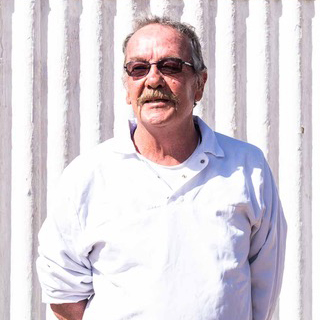
Oom Danie de Bruyn was ‘n spesiale mens. Ek het eintlik nog uitgesien om hom weer te sien – dit sou nou einde Des 2021 wees of sommer in die eerste week van 2022. Ons het 2 “modes” gehad – of lekker gesels of mekaar ge-ignoreer vir die dag. Ons laaste gesprek: Ek: “Ok, Oom Danie – ek het nou genoeg kak aangejaag vir die dag en gaan nou loop.” Oom Danie:”Ja dis reg, fokof.” Met ‘n smile op sy gesig natuurlik 😉
Fantasiese storieverteller(en hy het baie gehad) en alles uit ondervinding, raadgewer, houer van logika, pH meter vingers en termometer elmboog is maar paar van sy vele talente. Hardkoppige volger van sy eie raad en pad, en as jy hom nie met soliede data verkeerd kan bewys nie, dan bulldozer hy in ‘n rigting sonder stop. As hy van jou gehou het dan het hy en indien nie, dan het hy jou niks tyd gegee nie, behalwe die nou-en-dan verbale hou voor die kop. Komende van die Weskus kon ek dit waardeer. Dit was altyd binne konteks en nie onregverdig. Hy het regtig baie ondervinding van alle fasette van suiwel gehad en dit met trots en liefde gedeel as jy mooi vra. Soms met ‘n toets en baie redenasie, maar altyd met liefde en skewe glimlag. Beterweterig, want hy het regtig beter geweet.
Vir sy vrou en kinders was hy lief, en het baie gepraat oor hoe goed hul doen en dat hulle pad reguit is. Liefde en sterkte aan Tannie Johanna, Rick, Derick and Juanita.
Oom Danie, ek sal ons geselsies mis. Ek waardeer jou bydrae tot my lewe en ek sal jou onthou.
As iemand ‘n storie/fotos van Oom Danie het wat hulle wil deel, kan julle dit vir my stuur by leon@alivingway.com en ek sal by die artikel insluit.
Oom Danie het vir werk opgedaag op 27/12/2021 en het huis toe gegaan nadat hy sleg gevoel het. Ons vermoed hy is daar aan ‘n hartaanval oorlede.
Landbou Radio [Afrikaans]
Leon van der Westhuizen, also known as Leon the Milkman, talks about the difference between pasteurization and processing for cheese making. He explains how Mozzarella cheese is made.
My son is starting a company :-)
After a year of experience in the roof truss industry, my son, Drewhan, has started his own company.
Please support him.
Have a look at his website on https://dwroofing.co.za or his Facebook page at https://www.facebook.com/DWRoofs
https://www.gumtree.co.za/a-building-trades/strand/roof-designer/10010075627101012949553409
https://www.sayellow.com/@3?nt=40700#
https://www.sayellow.com/view/south-africa/dw-roofing-in-strand
https://yellow.place/en/dw-roofing-strand-southafrica
https://www.cybo.com/ZA-biz/dw-roofing-pty-ltd
https://www.webwiki.com/dwroofing.co.za
https://www.iglobal.co/south-africa/strand/dw-roofing-pty-ltd-1
Landbou Radio: Spesialiteits Kase
Ek praat met Gerda le Roux van Landbou Radio oor die maak van spesialiteits kase se voordele vir klein en medium grootte kaasmakers. As jy haastig is, ek is op vanaf minuut 32 😉
Whatsapp Cheese Making Consultant
Super proficient Whatsapp Cheese Maker 🙂 I can consult virtually – process normally consists of screening meeting, working with you for a day on your normal process, then applying suggested changes and evaluating results with you. I enjoy problem solving and systemising to prevent recurring issues.
Normally 50 Euro per hour – and since cheese making is a slow organic process, this means I can check in for 5 minutes every hour to make up the time – so I can basically be available for the whole process and next day for follow-up for 50 Euro 😉 Every new hour started will be billed at 50 Euro. Normal factory/industrial processes will bill 100 Euro minimum total on average as there is some pre-work to be done to assure that we take the right approach for your production area capabilities.
Mail me on leon@alivingway.com for more info and to book.
Cheesemaking.co.za/shop NEW FAQ :-)
https://cheesemaking.co.za/shop/faq
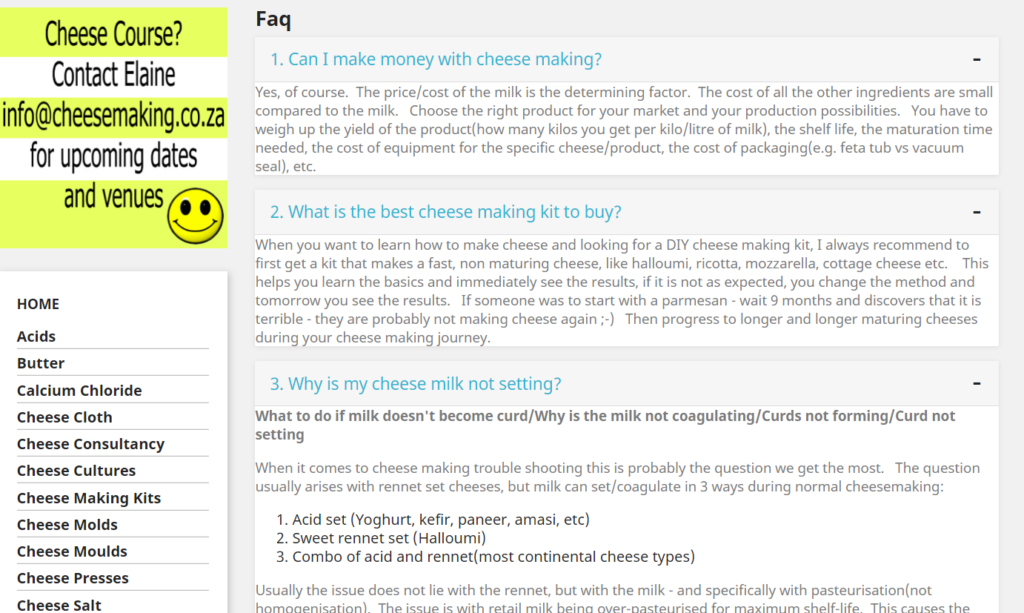
Looking for a good cheese making FAQ (frequently asked questions page)? Check out our new Frequently Asked Question page on Cheesemaking.co.za/shop!
We will add to it regularly, with own content and answering submitted questions.
Here is just one example question we answer and we will update as needed:
What to do if milk doesn’t become curd/Why is the milk not coagulating/Curds not forming/Curd not setting
When it comes to cheese making trouble shooting this is probably the question we get the most. The question usually arises with rennet set cheeses, but milk can set/coagulate in 3 ways during normal cheesemaking:
- Acid set (Yoghurt, kefir, paneer, amasi, etc)
- Sweet rennet set (Halloumi)
- Combo of acid and rennet(most continental cheese types)
Usually the issue does not lie with the rennet, but with the milk – and specifically with pasteurisation(not homogenisation). The issue is with retail milk being over-pasteurised for maximum shelf-life. This causes the milk protein to be denatured and the rennet enzyme does not “recognise” the protein. Much like the change we see from raw egg to cooked egg. Think about this: calves drink raw milk in nature, so the enzyme is made to work on raw milk. If you do not believe me, take some UHT long-life milk and put some rennet in it….nothing happened? Right you are!
Also remember that effective pasteurisation is a combination of temperature and time, so even though you do not exceed the recommended temp, if you take too long to cool it down, then you are also over-pasteurising.
So with rennet coagulation we have 3 main factors:
- the rennet
- the milk protein(casein)
- soluble calcium(calcium chloride addition)
If one milk has a lower protein level than another, then all factors considered, it will set slower and weaker. If milk is diluted by water, then the calcium and the protein in the milk, will be less and affect the setting.
Antibiotics do not have an influence on setting: https://www.youtube.com/watch?v=8i_20A8nCd8
With new rennet or milk source, I always like to do a little test, where I heat half a cup of the milk in the microwave to 35C and then add a small amount of rennet – if the milk coagulates within half an hour, then it will work with the bigger volume too. This saves you from putting 20 litres into a pot, going through the motions, only to discover that the milk is not setting.
So where do I look first for problems:
- over-pasteurisation
- dilution
- mastitis milk(this lowers casein and produces other enzymes not helpful in your cheese making, and lifts pH)
- too high or low temperatures(too high will knock-off the rennet and too low will have you waiting forever)
- As rennet is a stomach enzyme it works great in acid environment, so high pH will negatively affect it.

 Follow me on