Anything dairy-related

Dairy News

First Cheese Making Course for 2014

Hi, Cheese Fans

Happpy New Year to All!

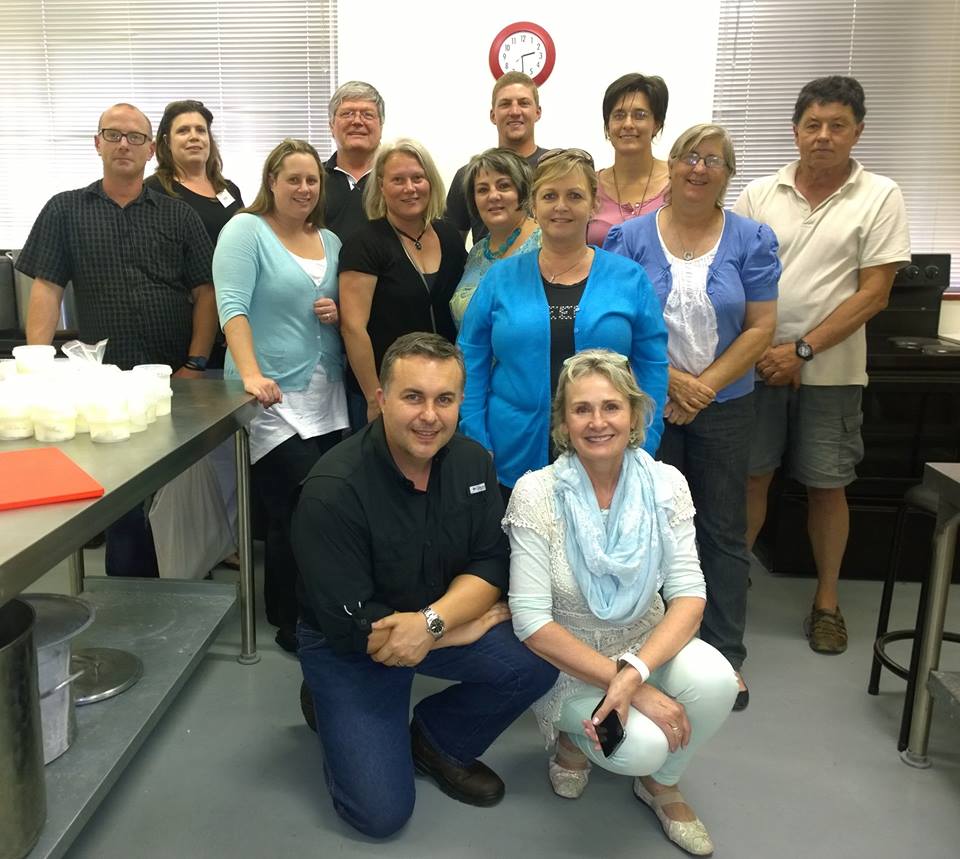
We are presenting our first cheese making course at the University of Stellenbosch on 23,24 January 2014.  Please contact Elaine@alivingway.com for more info and sign-up.

I hope to see you there!

Drink your milk,

Leon the Milkman

Place to stay for cheese makers

Hi, Cheese Enthusiast

If you are ever in South Africa in the Southern Cape, close to Riversdale or Stil Bay (Stilbaai) then pop over to stay at A Farm Story Guest House to experience real farm living.  On the farm you are next to the dairy, there is a fully functional cheese factory and it is the point of the most Southern Battle in The Anglo-Boer War.

The house  played an important part in the history of the Cape, as the stables were used as a hospital during the most southern battle in the Anglo- Boer war in 1902.

Go and check them out at www.afarmstory.co.za

http://www.youtube.com/watch?v=xrhUnPRu5xs

Cheers,

Leon the Milkman

Goodbye Tony :-(

Today I went to the funeral service of Antonio James Morrone.  It was a sad day for the South African food and laboratory industry.   As opposed to myself I have never heard this man say anything bad about someone else, even when listening to my rants!  He was always full of concern and care for everyone else’s problems and glad to share in their joy.  You could see the glint in his eyes in sharing his joy with everyone he met.

My thoughts are with his brother Michael and the rest of his family.  You were all blessed with him, may you still be with him looking after you from above.

Tony we will see each other again one day – if we are too far to shake hands – wave at me and smile.

http://www.tridentinstrumentation.co.za/


Alizarol SMS :-)

Client: Hi, Leon.  This is an alizarol test

Leon: Super acid, do pH

Client: 6.7 pH. What does exactly mean acid?  old?

Leon: Impossible, that yellow is acid milk. Could be old, or high bacterial load or chemical.

Client: OK, will check again.

Leon: Maybe used same container that citric acid was in? Must be some reason

Client: Hm!  Well done! The container was the culprit!  Thanks

Leon: 😉  good

Client: 🙂

May that be a lesson to you all, haha.

Out for now and have a great Monday,

Leon the Milkman


For online training with video on the alizarol test, that you can use to re-train or train new employees, please go to:

https://gum.co/alizarol


Back! :-)

Well, after losing my blog through some mistakes of mine and others, I am back blogging away to stay.  Thanks for waiting 🙂

Thanks to Renier for putting the blog back up!

We’ll talk soon.

Leon the Milkman

Rennet more about it – a lot more :-)

Rennet is used in the production of cheese as a milk curdling enzyme.

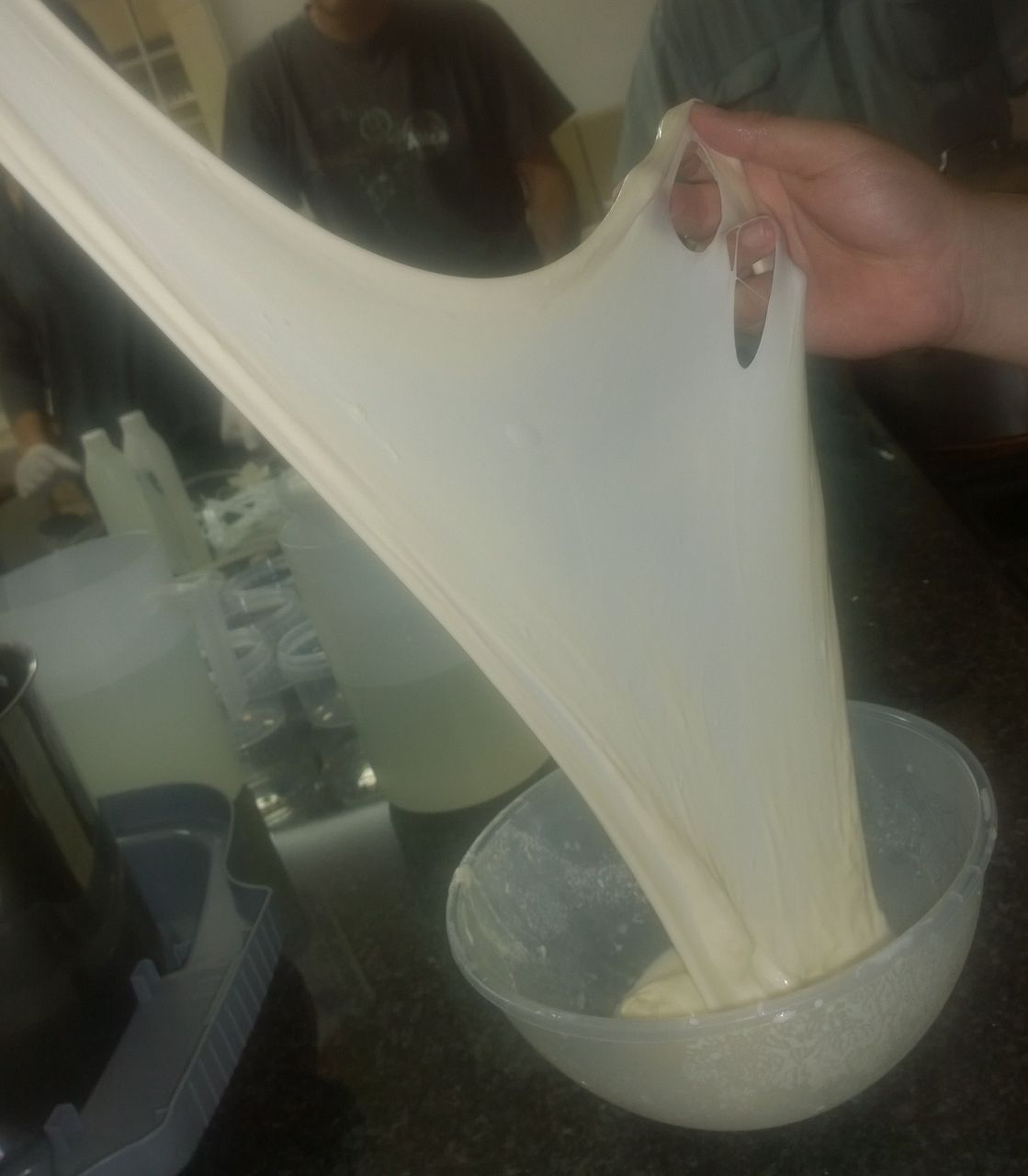
It converts milk casein (protein) from a soluble to an insoluble material and during this process; the rennet separates the milk into solids (curds) and liquid (whey).

The different milk coagulation systems available is natural animal rennet rennet from GMO organisms, coagulating enzymes from plant origin and coagulating enzymes from non-GMO microbial origin.

Animal is the best, but a lot of people prefer not to use it, because of religious views.  The closest product is rennet from GMO origin, since chemically it is just like that of natural, animal origin, but here we also have a protesting fraction of people, because they believe this type of product will harm them in some way.  They thus do not perceive this as “natural”.

Plant coagulation enzymes are not used commercially, since they are very hard to standardize and usually have a lot of side reactions that can cause off-tastes and other problems in cheese.

Microbial rennet of non-GMO origin has vastly improved and now has very few side- reactions.  This rennet is used in large amounts in the world, since it is classified as Halal, Kosher and vegetarian.   Technically these are not rennet, but milk coagulating enzyme.  Different organisms are used to produce non-GMO microbial rennet.

Microbial rennet is a food grade enzyme system produced by the controlled fermentation for non-genetically modified Rhizomucor miehei . It contains the specific protease activity that makes it effective as a milk clotting enzyme. The rennet have been specially treated to make the enzyme thermal labile sensitive to inactivation by heat at pasteurization temperatures.  Rennet can be bought in tablets and as liquid or paste.

As the economical alternative to cloned/ calf rennet, microbial rennet liquid has the same uses, process conditions and clotting time.

When buying rennet, certain characteristics need to be taken into account. This will include activity of 1:50,000 MCU/ml, form which should be a dark brown liquid, solubility (miscible with water), odorless and a specific gravity of approximately 1.14g/ml.

Rennet requires the availability of calcium ions for activity. Calcium, added as calcium chloride should be in the range of 10 to 100 grams per 100 litres of milk for optimum performance. The effect of calcium chloride concentrates on the activity of various enzyme samples and is superior to animal rennet.

Enzyme use levels are generally dictated by processing conditions, milk composition and calcium chloride concentration. In a general a rate of one half  that of regular strength calf rennet can be used, but laboratory or pilot scale tests should be run to optimize dose levels.

Effective working temperature range plays a big role in performance. Calf rennet has a much narrower range of optimum working than most of the new “rennet” systems.

Due to it’s thermal labile nature, extra care should be taken when storing rennet; therefore it should be stored in sealed containers under refrigerated (4?C to 8?C) to minimize the loss of activity.

When using rennet to coagulate milk, always make sure to check the specification sheet of the product that you plan to use, to make sure that you are using it in the rifgt way to get the most out of that specific product.

http://cheesemaking.co.za/shop/10-rennet-south-africa

rennet

Rennet


Leon the Milkman

Dairy and Cheese Consultant

Cape Town, South Africa

http://cheesemaking.co.za/shop/cheese-consultancy/25-cheese-consultant.html

About Me

Welcome to my Blog!
I'm Leon the Milkman,  dairy specialist and  professional cheese experimenter.

Contact Me

Email me at leon@leonthemilkman.com

or call during office hours 

(GMT +2) on +27(0)84 952 4685

I do SKYPE consultations

Follow Me

 Subscribe to this blog
Follow me on Twitter
 Connect on Facebook

Copyright


© 2010 by Leon the Milkman.

You're welcome to link to this site or use a single image and brief description to link back to any post. Republishing posts in their entirety is prohibited without permission.