Cheese
All my cheese-related posts
Buy cheese cultures in South Africa
Hi, Cheese Fans
You can now buy cheese cultures directly in South Africa:
Buy cheese cultures from
http://cheeseculture.co.za/2014/08/buy-cheese-cultures-south-africa/
Drink your milk,
Leon the Milkman
Cheese Making Shop, South Africa up and running!
Hi, Cheese Making Fans
Just follow the link if you are interested in cheese making and living in South Africa:
http://cheesemaking.co.za/2014/08/26/our-cheese-making-shop-is-up-and-running/
The online shop is taking orders for South African hobby cheese makers. If you have never made cheese before, give as a call or drop an e-mail so that we can assist you in buying the right ingredients and equipment for the type of cheese that you want to make.
Direct link for the cheese making shop to buy rennet, cultures, wax etc:
http://www.cheesemaking.co.za/shop
They are open for business!
Eat your cheese and drink your milk,
Leon the Milkman
Dairy and Cheese Consultant
Cheese Supplies, Cheese Making Suppliers, Cape Town, South Africa
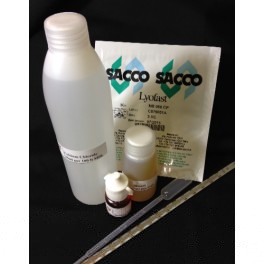
Cheese making shop, South Africa
Cheese Making Courses – South Africa – Intro
Cheese Making Courses – South Africa
For info on cheese courses email info@cheesemaking.co.za
Cheese Making Courses – South Africa
We have now arranged three courses in various provinces for February 2016.
They are as follows:
9 & 10 February 2016 in Pretoria NW to be held at – The Blue Pot Deli
12 & 13 February 2016 in Clarens OFS to be held at Dunelm Guestfarm
16 & 17 February 2016 in Mooiriver KZN to be held at St. Andrews Retreat
We present cheese making courses on invite in :
The Eastern Cape
The Free State
Gauteng
KwaZulu-Natal
Limpopo
Mpumalanga
The Northern Cape
North West
The Western Cape
We love Stellenbosch, Cape Town, Hartebeespoortdam, Clarens
Join us for a cheesemaking course by contacting elaine@alivingway.com
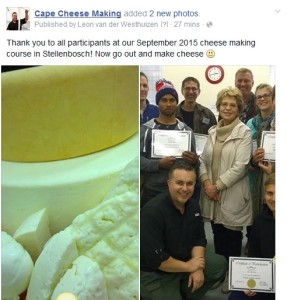
one of our cheese courses
We had a great cheese course!
Cheese making courses – South Africa
Hi, Cheese fans
Join us for our next cheese making course in Stellenbosch on 11,12 Sept 2014
Contact elaine@alivingway.com or 084 626 4931
https://www.youtube.com/watch?v=bM8Gafg_TKI
Drink your milk,
Leon the Milkman
Dairy and Cheese Consultant
Cape Town, South Africa
Cheese Making Courses – South Africa
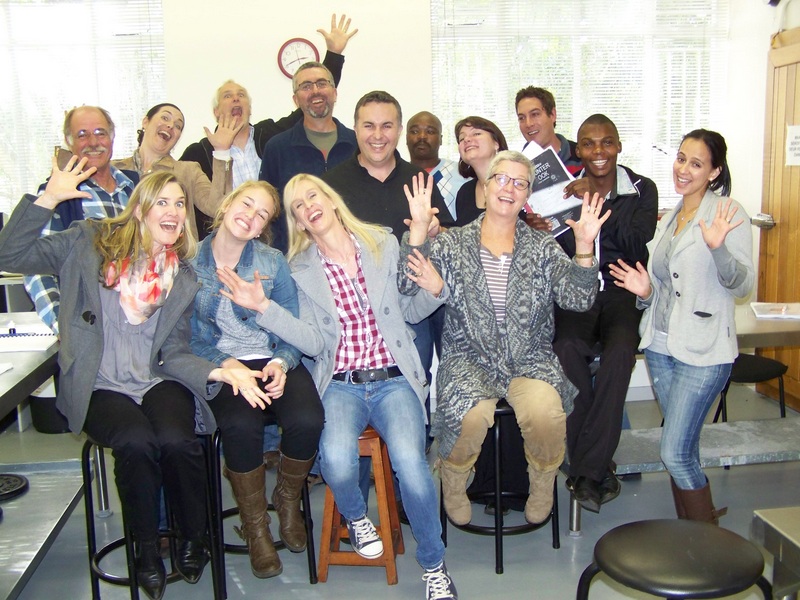
Cheese course, Stellenbosch. South Africa July 2013
Stellenbosch University Oct/Nov 2013 Cheese course
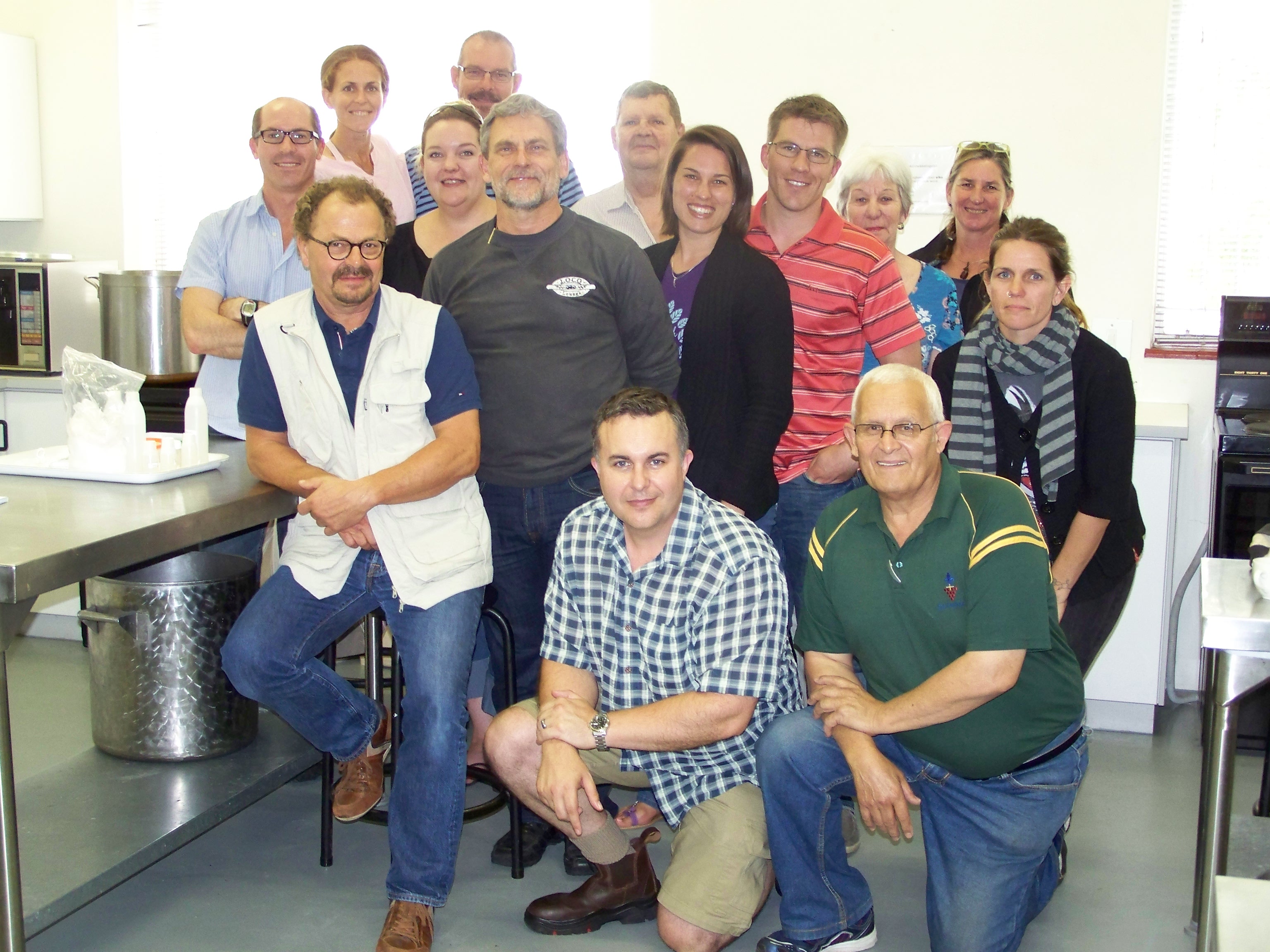
Cheese Course, Stellenbosch, South Africa
Successful cheese course! South Africa
Hi, Cheese fans
I just want to thank everybody that joined me on our latest cheese course in Stellenbosch. It was a wonderful experience to have fun with such a diversity of people with a unified interest in cheese making 🙂
Cheese course, Stellenbosch. South Africa July 2013
If you are interested in cheese or yoghurt making courses in South Africa, mail to info@cheesemaking.co.za and ask us when we will be in your area.
Drink your milk!
regards,
Leon the Milkman
3VF7TJTZQZFT
FaceBook group
Please join us at our facebook group:
http://www.facebook.com/#!/groups/cheesemaking/
Regards,
Leon the Milkman
Place to stay for cheese makers
Hi, Cheese Enthusiast
If you are ever in South Africa in the Southern Cape, close to Riversdale or Stil Bay (Stilbaai) then pop over to stay at A Farm Story Guest House to experience real farm living. On the farm you are next to the dairy, there is a fully functional cheese factory and it is the point of the most Southern Battle in The Anglo-Boer War.
The house played an important part in the history of the Cape, as the stables were used as a hospital during the most southern battle in the Anglo- Boer war in 1902.
Go and check them out at www.afarmstory.co.za
http://www.youtube.com/watch?v=xrhUnPRu5xs
Cheers,
Leon the Milkman
Gouda wash water insight
Hi, Cheese Makers
Have you ever considered testing your normal rinse/wash water quality for gouda and other cheeses that get “washed”?
If not, maybe consider testing for more than the usual coliforms and yeast and mold. Also test pH, hardness, etc. We are so used to doing pH on the milk, but never the water – I have seen water used for wash water from 4.98 to 9.5. This will have some influence on your process and we should aim for 6 to 7 ideally. The water can easily be acidified with citric acid.
Any comments?
All the best,
Leon the Milkman
Dairy and Cheese Consultant
Cape Town, South Africa
Make your own gouda cheese:
http://cheesemaking.co.za/shop/home/17-big-cheese-making-kit-south-africa.html
Gouda

 Follow me on